




Inspiration
Back to school: Maya’s journey to the classroom
A new academic year brings excitement and fresh opportunities for millions of children across the Netherlands. But for many refugee children, it also brings uncertainty, obstacles, and missed opportunities.
At the People for People Foundation, we work alongside partners to improve the lives of refugee children in the Netherlands - from meeting their essential needs to equipping them with the items needed to go to school. Along the way, we meet inspiring individuals who have made this cause their life’s calling. One of them is Jessica.
Earlier this year, Jessica helped 15-year-old Maya enroll in school – something that should have been straightforward but wasn’t, due to a paperwork error. “She was lucky she had me,” Jessica says. “But most children don’t have anyone. For them, that chance is lost forever.”
We spoke with Jessica to understand what it’s really like to be a school-aged refugee in the Netherlands – and what it takes to make a difference.
When the veil lifted
Jessica’s journey into refugee support began by chance. “I was scrolling through Facebook when I saw a post calling for volunteers to help refugees in France. “I thought, I can do this for a weekend, so I signed up,” she recalls.
But what she found there changed her life. “When I arrived, I was shocked. People were living in tents, in harsh conditions. I listened to their stories and thought – this isn’t fair. I felt such a strong urge to help, and I haven’t stopped since.”
Back home in the Netherlands, Jessica began supporting refugees in local camps. “I was born here, and that’s my luck. But these children weren’t. They have to wait for someone else to decide if they can stay. That feels unfair to me.”
Meeting Maya
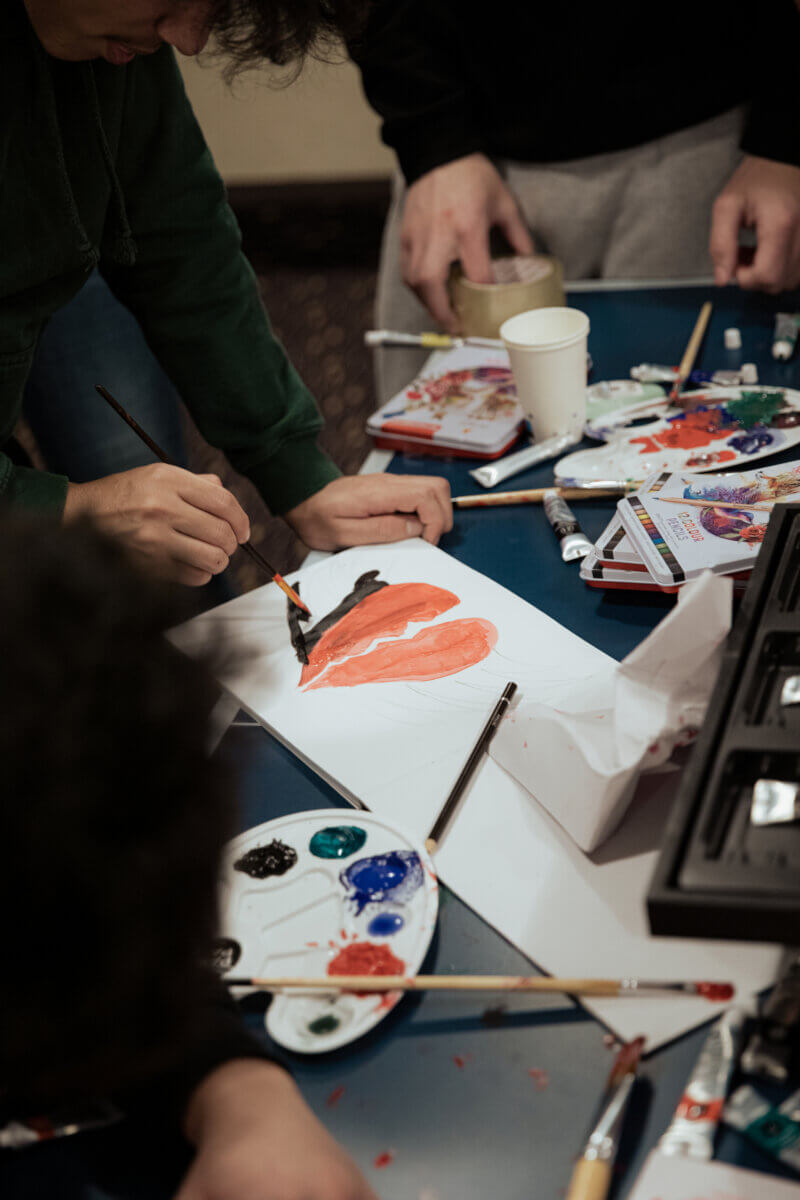
While organising creative workshops and clothing donations at a nearby camp, Jessica met Maya. “I found out she wasn’t allowed to go to school because her documents listed her as 21 years old while she’s 15. She came here scared and lonely, fleeing violence and threats to her life. I knew I had to help her start over.”
Maya was bright and curious, speaking some English, but had never experienced a normal childhood. “She didn’t even know basic things about everyday life,” Jessica says. “She needed to be a child – go to school, make friends, see the real world, and grow up with joy, not fear.”
Jessica advocated on Maya’s behalf, using her network to find a school willing to take her. She even became Maya’s legal guardian to make it possible. “Now she has a best friend her age, a small job, and she’s thriving. It’s not just about education – it’s about friendship, fun, a sense of normalcy, and feeling like a kid again.”
A system that holds children back
But Maya’s case is far from unique – and far from resolved. Another big challenge for children living in temporary asylum centres in the Netherlands is frequent relocations. Every time they are moved to a new asylum centre, they must start the school registration process almost from scratch.
“It can take months to get them into a new school,” says Jessica. “And sometimes, just when they finally settle in and start to rest, they get relocated again. It’s traumatic for the children and frustrating for teachers. And it causes huge learning gaps.”
For children nearing 18, these delays can have life-altering consequences. “Some kids only get enrolled right before turning 18. Then suddenly, they’re told they can’t attend school anymore.”
At that point, they might qualify for Inburgering (integration programs), but many aren’t ready. “They’ve missed too much. Some can’t even read or write. If they don’t get into school early enough, they lose their chance to ever catch up or reach their potential.”
Hope grows in the classroom
Six months after enrolling, Maya’s transformation is clear. “Her teachers say she’s always on time, eager to learn, cheerful and lovely,” says Jessica proudly. Maya now also attends a free summer school where she sings, dances, and plays – just like any other child.
Maya dreams of completing her education and working in an elderly care home.
Jessica has dreams too: “I hope the system gets better. If there’s an error in a child’s age, there should be a quick and simple way to fix it. Relocations must stop disrupting children’s lives. No child should have to fight – or go to court – just to go to school.”



We call on policymakers to ensure every refugee child can access uninterrupted education, safe living conditions, and a chance to grow, learn, and dream – without fighting the system.
Names have been altered to respect privacy.

